July 5, 20268 min read
Disposable Cameras vs Wedding Photo Apps: Which Is Better?
Disposable cameras vs wedding photo apps: an honest comparison of cost, quality, and charm so you can choose the right way to capture guest candids.
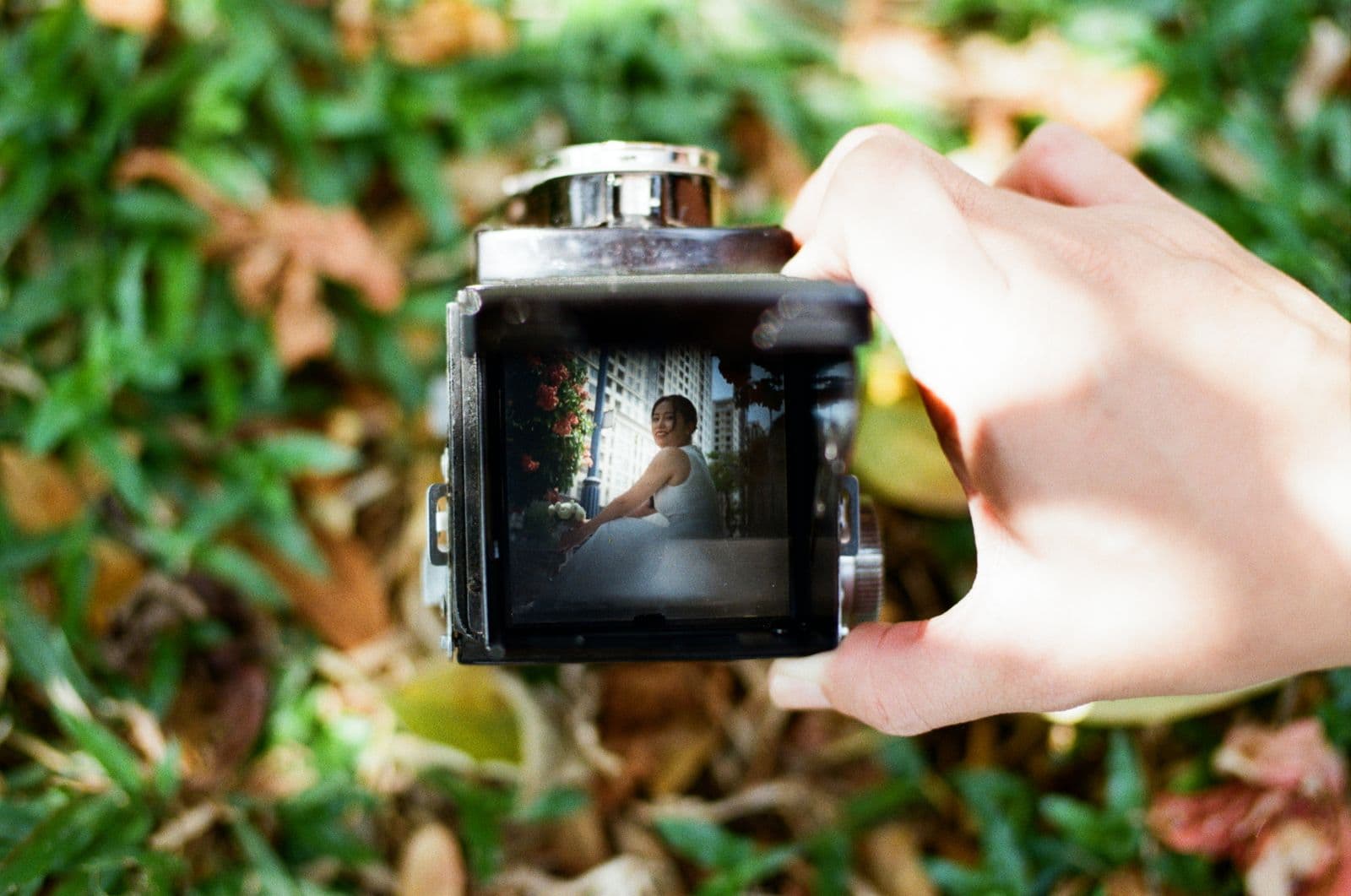
Disposable cameras scattered across the reception tables are a beloved wedding tradition. There is something irresistible about a little cardboard camera with a plastic wind wheel, a stack of them waiting to be picked up between courses, and the promise of a roll full of surprises once the film comes back. For decades they were the only easy way to hand your guests a lens and let them capture the night from their own point of view. Many couples still love them, and for good reason.
Wedding photo apps are the modern default. Instead of a physical camera, guests scan a QR code, open a web page, and send you the photos already sitting in their phones. Both approaches are trying to do the same thing: capture the candid moments your photographer cannot be in ten places at once to catch. They just go about it in very different ways. Here is an honest look at how disposable cameras and wedding photo apps really compare, what each does well, and when each one makes sense.
The Case for Disposable Cameras
Let us be fair to disposable cameras first, because their appeal is genuine and it is not just nostalgia talking. A disposable camera turns photography into a small game. Nobody is checking the screen, nobody is retaking the shot five times to get their good angle, and nobody knows what they actually captured until weeks later. That constraint is the whole charm. Here is what disposable cameras genuinely get right:
- Tactile, screen-free fun. Picking up a physical camera, winding the film, and pressing a stiff shutter button is a small delight, especially for kids and older guests who grew up with film.
- The delight of surprise. You have no idea what you captured until the film is developed. Opening that first envelope of prints weeks after the wedding is a genuinely joyful moment you cannot replicate on a screen.
- A charming table centerpiece. A neat row of retro cameras looks lovely on a reception table and doubles as a talking point that invites guests to join in.
- No phones-out feeling. Handing someone a dedicated camera keeps them off their phone. There is no notification to check, no scrolling, just the single task of taking a picture.
- Unexpected, unposed shots. Because guests cannot review and delete, you end up with wonderfully imperfect, honest frames that a more self-conscious phone photographer might have thrown away.
The Downsides of Disposable Cameras
The same qualities that make disposable cameras charming also make them unreliable as your main way of collecting photos. If you are counting on them to document the day, it helps to know exactly where they fall short:
- Low and inconsistent image quality. A single-use camera has a plastic lens, a fixed focus, and a tiny built-in flash. Indoor and evening shots, which is most of a wedding, often come out dark, grainy, or blurry.
- Cost per camera plus developing. Cameras run roughly $10 to $20 each, and prices vary, and that is before you pay to develop and scan every roll. Buy a dozen and the total climbs quickly.
- A limited number of shots. Each camera holds only around 27 exposures. Once they are used up, they are done, and guests who wanted to keep snapping simply cannot.
- No instant view, so mistakes go unnoticed. A thumb over the lens, a closed flash, a shot of the ceiling in someone's pocket. Nobody sees the mistake in time to fix it, so a chunk of every roll is wasted.
- The wait for developing. You will not see a single frame until the cameras are collected, dropped off, and processed, which can take a week or more after the honeymoon.
- Cameras go unused, lost, or walk off. Some get buried under napkins, some end up in a guest's bag, and some are never picked up at all. It is common to develop far fewer usable shots than you paid for.
The Case for a Wedding Photo App
A wedding photo app takes the same idea, guests capturing the day from their own angle, and removes almost every limitation of film. The best ones do not even require an app to install, which matters more than it sounds, because a reception is no place to ask people to visit an app store. Here is what a good photo app brings to the table:
- Unlimited high-resolution photos and video. There is no roll to run out. Guests can contribute as many full-quality photos and video clips as they like, all night long.
- App-free QR upload. Guests scan a QR code with their phone's built-in camera, a web page opens, and they upload in seconds. Nothing to download, no account to create.
- Everything in one gallery. Every upload from every guest lands in the same shared album automatically, instead of being trapped in individual camera rolls or scattered rolls of film.
- A live slideshow. Photos can appear on a screen at the reception in real time, which is fun in the moment and, crucially, encourages more guests to join in.
- Results you see and download immediately. No waiting for developing. You can view, sort, and one-click download every original the same night, in full resolution.
If your priority is not missing anything, our guide on how to collect every photo your wedding guests take walks through the full collection strategy from signage to the live screen.
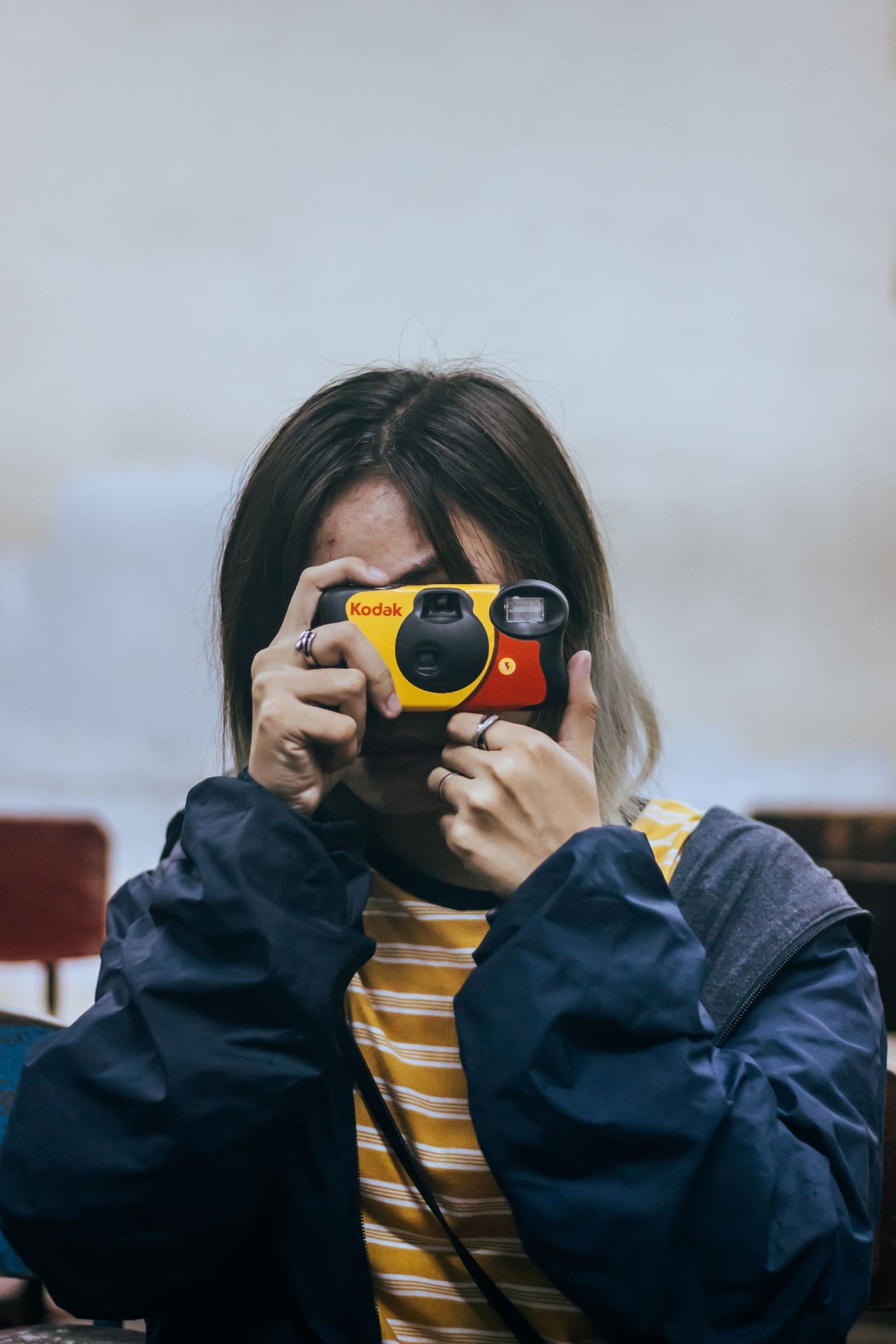
Head to Head
| What matters | Disposable cameras | Wedding photo app |
|---|---|---|
| Image quality | Low and inconsistent | High, full resolution |
| Number of photos | Around 27 per camera | Unlimited |
| Cost | Per camera plus developing | Low flat cost, free to start |
| See photos instantly | No, wait for developing | Yes, immediately |
| Live slideshow | No | Yes |
| Keep originals | Prints and scans only | Full-resolution originals |
| Novelty and charm | High, a real crowd-pleaser | Modern and convenient |
The Cost Reality
It is worth doing the honest math, because disposable cameras feel cheap until you add everything up. A single camera runs roughly $10 to $20 each, and prices vary, so a handful for the tables is already a meaningful spend. Then you pay again to develop and scan each roll, and you do it knowing that a fair share of those frames will be dark, blurry, or wasted on accidental shots. Multiply that across ten or twelve cameras and the real cost per usable photo is surprisingly high. A photo app flips that equation: it collects an unlimited number of full-resolution photos and videos for a single low flat cost, and it is free to start, so you can set it up and see how it feels before you commit to anything.
Why Not Both?
This does not have to be a fight, and plenty of couples happily do both. The smart move is to let each do what it is best at. Use a photo app as your reliable primary way to gather everything, because it captures the most photos, in the best quality, with instant results and a gallery that does not expire. Then scatter a few disposable cameras across the tables purely for novelty and charm, and treat whatever comes back from them as a delightful bonus rather than your safety net. That way you get the tactile fun and the surprise-envelope moment without betting your wedding memories on a plastic lens. For a broader look at gathering guest photos well, see our guide on the best way to share wedding photos with guests.
The Verdict
If your goal is to capture the most photos, in the best quality, at the lowest real cost, a wedding photo app wins clearly. It removes the roll limit, the developing wait, the wasted frames, and the risk of cameras that never get used, and it hands you full-resolution originals you can enjoy the same night. That said, disposable cameras are not a mistake. They are a genuinely charming supplement that adds tactile fun and a lovely dose of surprise. They just are not a reliable primary plan for documenting the day. Think of the app as the workhorse and the disposables as the party trick.
Whichever way you lean, the real question is simple: at the end of the night, do you want to hope a box of cardboard cameras captured your wedding, or do you want to know that every candid your guests took is already sitting in one gallery, in full quality, ready to download? For most couples the honest answer points to an app, with a few disposables sprinkled in for the joy of it.
Frequently asked questions
Are disposable cameras worth it at weddings?
They are worth it as a fun, nostalgic extra rather than your main plan. Guests enjoy them, and the surprise of developing the film is genuinely lovely. Just expect inconsistent quality and some wasted frames, so pair them with a more reliable way to collect photos.
How much do disposable cameras cost for a wedding?
Individual cameras typically run roughly $10 to $20 each, and prices vary, plus the cost of developing and scanning each roll. Buying a dozen for the tables, then paying to process them all, adds up quickly, especially once you account for the shots that do not come out.
Are wedding photo apps better than disposable cameras?
For capturing the most photos in the best quality at the lowest real cost, yes. A photo app offers unlimited full-resolution photos and video, instant results, and a gallery that does not expire. Disposable cameras still win on tactile charm and the fun of surprise.
Can I use both disposable cameras and a photo app?
Absolutely, and many couples do. Use the app as your dependable primary way to collect everything, then scatter a few disposable cameras for novelty. You get the reliability of digital plus the charm of film, without betting your memories on a plastic lens.
Do disposable camera photos come out well?
Sometimes they come out beautifully, with a warm, grainy film look people love. But results are inconsistent because of the fixed focus, plastic lens, and small flash. Indoor and evening shots, which make up most of a wedding, are the hardest for a disposable camera to capture cleanly.
Get every candid, in full quality
A no-app QR photo app collects unlimited full-resolution guest photos to one gallery, with a live slideshow. Free to start.