July 13, 20269 min read
How Many Photos Does the Average Wedding Actually Generate?
How many photos does the average wedding generate? A realistic, estimate-based breakdown of photographer and guest photo counts, and why most guest shots vanish.
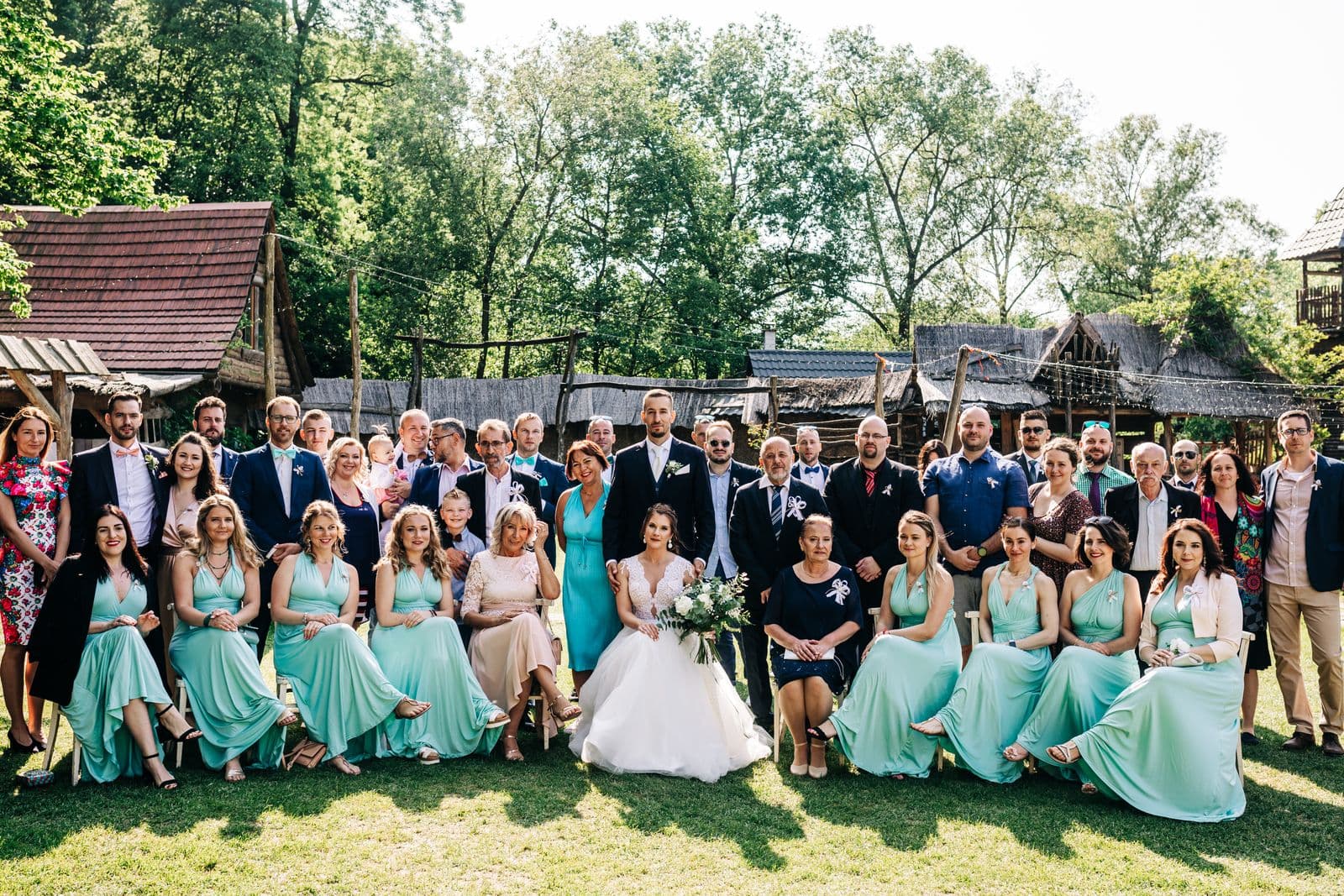
Ask most couples how many photos their wedding produced and they will name one number: whatever their photographer handed over. Maybe five hundred edited images, maybe eight hundred, delivered in a tidy online gallery a few weeks after the day. That figure feels like the total. It is not. It is the visible tip of a much bigger pile, and the reason couples underestimate the real number is simple: the biggest source of wedding photos is almost completely invisible to them. It is the phones in their guests' pockets.
Every one of those phones is a camera, and on a wedding day most of them get used. The trouble is that the photos they take never make it back to the couple, so they never get counted. This article is a realistic, numbers-first breakdown of how many photos a wedding actually generates, split between the professional and the crowd, and sized by guest count. Every figure here is an estimate rather than a hard fact. Real weddings vary enormously, and anyone who quotes you an exact average is guessing with more confidence than the data deserves. Treat these as reasonable ranges, useful for planning, not as findings from a study.
The Two Sources of Wedding Photos
Every wedding produces photos from two distinct places, and they behave completely differently. The first is your photographer, one or two professionals working to a plan, delivering a curated set of edited images. This is the source couples think of first because it is the one they pay for and the one that arrives in a neat package. It is predictable, high quality, and easy to count.
The second source is your guests. Fifty, a hundred, two hundred people, most of them carrying a phone, snapping whatever catches their eye across an entire day and night. This source is far larger than the professional gallery in raw volume, and it captures things the photographer physically cannot: the reactions in the back rows, the table your photographer was not standing at, the dance floor at midnight from the middle of the crowd. Here is the catch that runs through this whole article. The bigger of the two sources is also the one that mostly never reaches the couple. Guest photos scatter across a hundred camera rolls and quietly stay there.
How Many Photos the Photographer Delivers
For a full wedding day, a professional photographer typically delivers somewhere in the range of roughly 400 to 800 edited images, though estimates vary widely with the length of coverage, the size of the day, and the photographer's own style. A shorter package covering only the ceremony and a few hours after might land closer to 200 to 400. A long day with two shooters, a big bridal party, and coverage from getting ready through to the last dance can push well past 800. These are ballpark figures, not promises, and your own contract is the only number that actually binds.
The important thing to understand is that the delivered gallery is heavily filtered. Photographers shoot far more than they hand over. It is common for a pro to capture several thousand frames across a full day and then cull hard, deleting duplicates, blinks, test shots, and anything soft, before editing the survivors. So the 400 to 800 you receive is the polished remainder of a much larger raw take. That gap matters, because it means even the professional side of your wedding generated more images than you will ever see. The guest side, as we are about to cover, is larger still and filtered by almost nobody.
How Many Photos the Guests Take
This is where the numbers get big and fuzzy at the same time. Guests, collectively, tend to shoot far more than the photographer does, because there are so many of them and because they keep shooting through moments the pro has moved on from. Nobody culls a guest camera roll. Every burst, every near-duplicate, every slightly blurry dance-floor shot survives. As a rough estimate, it is reasonable to expect participating guests to generate several times the volume of the professional gallery, though this swings hard from one wedding to the next. A quiet afternoon reception with an older crowd produces a fraction of what a long night with a packed dance floor does. A few things drive the guest number up or down:
- Guest count. More people means more cameras. This is the single biggest lever. Doubling your guest list roughly doubles the pool of phones capturing the day, even if not everyone shoots.
- Phone ownership and habit. Nearly every adult guest carries a capable camera now, but not everyone uses it. A crowd that loves posting to social media will out-shoot a more reserved group by a wide margin.
- Length of the day. A wedding that runs from a morning ceremony to a late-night send-off simply has more hours in which photos get taken. More time on the clock means more shots on the roll.
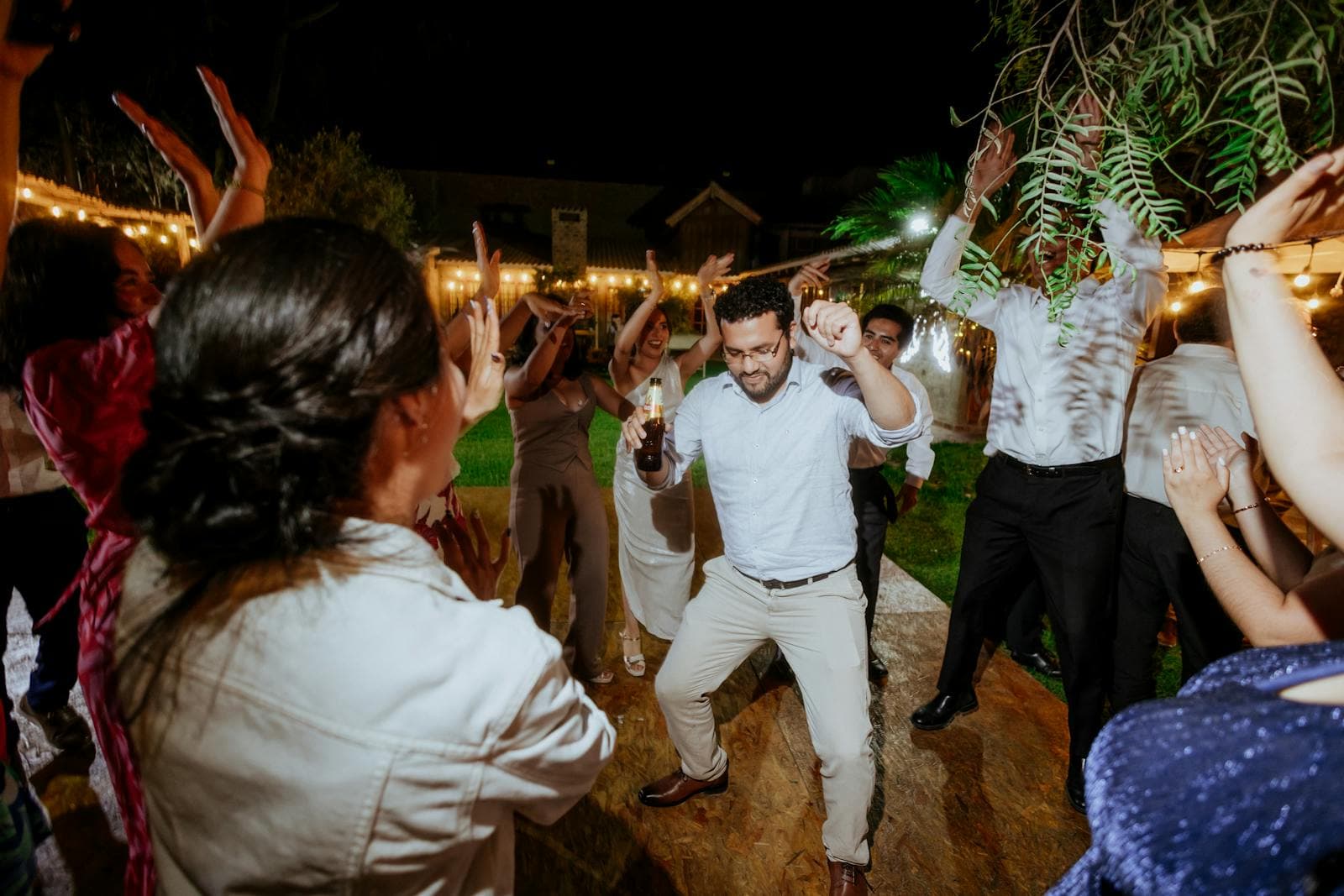
- Dancing and drinks. The reception, and especially the dance floor, is where guest phones come out in force. A lively party generates a disproportionate share of the total, most of it candid and unrepeatable.
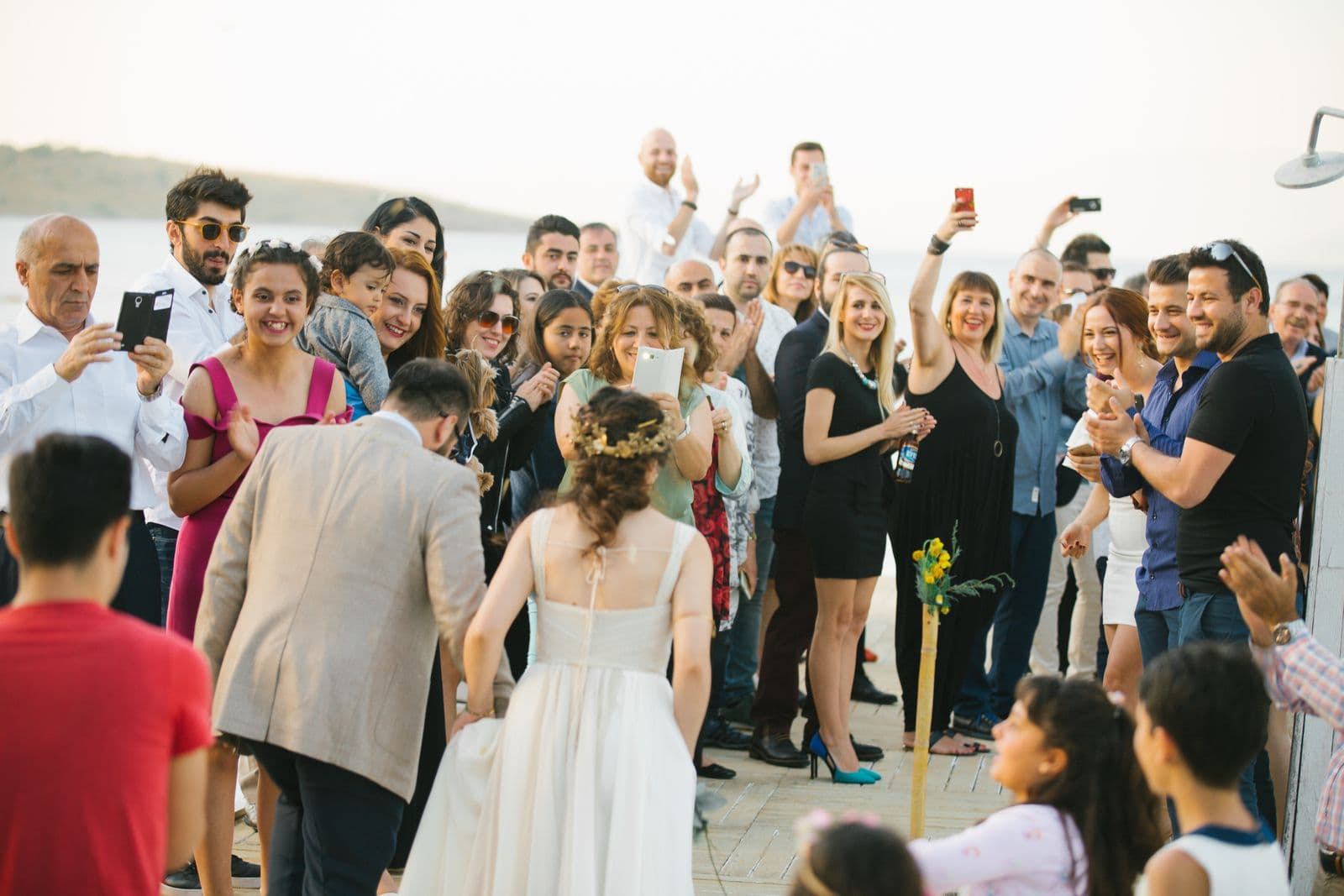
- Key moments with an audience. The first kiss, the speeches, the cake, the first dance. When something happens that the whole room watches, dozens of phones lift at once, and you end up with the same moment from every angle in the building.
Estimated Photo Counts by Guest Count
Here is where the two sources come together into a rough picture of total volume, sized by how many guests you invite. To be clear about the method: the guest figures below assume a fairly typical mix, where perhaps half to two thirds of guests take at least some photos, and each of those shoots a modest handful across the day. The total column then adds a mid-range professional gallery on top. Every number in this table is an estimate and a broad range at that. Your real figures could land above or below depending on the crowd, the length of the day, and how much dancing there is. Read the ranges as planning guides, not guarantees.
| Guest count | Est. guest photos | Est. total incl. pro |
|---|---|---|
| 50 guests | 300 - 700 | 700 - 1,300 |
| 100 guests | 600 - 1,400 | 1,000 - 2,000 |
| 150 guests | 900 - 2,200 | 1,400 - 3,000 |
| 200+ guests | 1,300 - 3,000+ | 1,800 - 3,800+ |
Notice the shape of it. Even at a small fifty-guest wedding, the guest photos alone can rival or exceed the professional gallery, and by the time you reach a large wedding the crowd is producing several times what the pro delivers. The exact totals do not matter much. The point the table makes is directional and hard to argue with: your guests generate the majority of the photographs taken at your wedding, and that share only grows as your guest list does.
The Catch: Most Guest Photos Are Never Seen
Here is the part that turns an interesting statistic into a genuine loss. Of that large guest number, the couple typically receives only a small fraction. Estimates are impossible to pin down here, but it is fair to say most couples see a tiny slice of what their guests actually captured, sometimes only the handful of shots a few people bother to text or post. The rest, the overwhelming majority, stays on the phones that took it and slowly disappears as those phones fill up, get upgraded, or simply move on.
This is not because guests are unwilling to share. It is because nothing on the day makes sharing easy, so the intention never turns into action. People mean to send their photos and then life resumes on Monday and they never do. If the by-guest-count estimates above are even roughly right, the gap between photos taken and photos received is the single largest pool of lost images at any wedding. Closing it is exactly what our guide to how to collect every photo your wedding guests take is about, and it is the difference between a gallery of fifty guest shots and one of five hundred.
How to Actually Capture the Full Number
The good news is that the fix is cheap and the payoff is enormous, because you are recovering photos that already exist rather than creating new ones. A few simple moves turn that lost majority into a gallery you actually own:
- Give guests one QR code to scan. A single code that opens a browser upload page removes every step between wanting to share and having shared. No app to install, no account to make, just scan and upload in seconds.
- Run a live slideshow at the reception. When guests see their own photos appear on a screen, they upload more, and the people who have not shared yet reach for their phones. It turns collecting into a game the whole room joins.
- Announce it once, out loud. Ask the MC or best man to mention the code a single time after dinner. One sentence does more for participation than any amount of signage on its own.
- Download and back up afterward. Once the uploads are in, pull the full set down in original quality and store it safely. Our guide to how to download all your wedding guest photos walks through doing that without losing anything.
The tool matters less than the friction. A method guests can use in ten seconds from their seat gets used by most of the room, and that participation rate is what moves you from receiving a fraction to receiving the majority. For a fuller comparison of the options, see the best way to share wedding photos with guests, which weighs QR uploads against hashtags, shared albums, and the rest.
So how many photos does the average wedding generate? Honestly, more than almost anyone counts, because the count usually stops at the photographer's gallery and ignores the far larger pile the guests created. The professional set is real and valuable, but it is a curated few hundred images. The guests, together, capture the messy, joyful, whole-room version of the day, and most of it is currently being thrown away one phone upgrade at a time. The exact numbers will always be estimates. The lesson behind them is not: the photos are already there, and the only real question is whether you collect them before they are gone.
Frequently asked questions
How many photos does a wedding photographer take?
On the day, a professional often captures several thousand frames across a full wedding, then culls heavily. What you actually receive is usually an estimated range of roughly 400 to 800 edited images for full-day coverage, though this varies a lot with package length and shooting style. Your contract is the only reliable number.
How many photos do guests take at a wedding?
It varies enormously, but as a rough estimate participating guests collectively tend to shoot several times more than the photographer delivers, because there are so many of them and nobody edits a phone camera roll. A lively reception with a packed dance floor produces far more than a short, quiet afternoon event.
How many photos should I expect from my wedding?
As an estimate, plan for a few hundred edited images from your photographer plus, potentially, a much larger number of guest photos if you actively collect them. Without a collection system, most couples only ever see the professional gallery plus a small handful of guest shots. All of these figures are broad estimates rather than fixed numbers.
Why do I only get a few guest photos?
Not because guests are unwilling, but because nothing on the day makes sharing effortless, so good intentions fade by Monday. Most guest photos stay on the phones that took them and slowly disappear. Giving guests one easy way to upload, like a QR code, is what closes that gap. See how to collect every photo your wedding guests take.
How many photos is normal for a 100-guest wedding?
As a rough estimate, a 100-guest wedding might generate somewhere around 600 to 1,400 guest photos on top of a professional gallery, for a total loosely in the 1,000 to 2,000 range. That is a wide band on purpose, since the real figure swings with the crowd, the length of the day, and how much dancing there is. Treat it as a planning guide, not a fixed count.
Collect the photos you are missing
Most guest photos are never collected. A QR code gathers them all to one gallery, no app. Free to start.