July 2, 20269 min read
Wedding Hashtag vs QR Code: Which Should You Use?
Wedding hashtag vs QR code: a fair head-to-head on how each collects guest photos, the real pros and cons, and which one actually gets you the pictures.

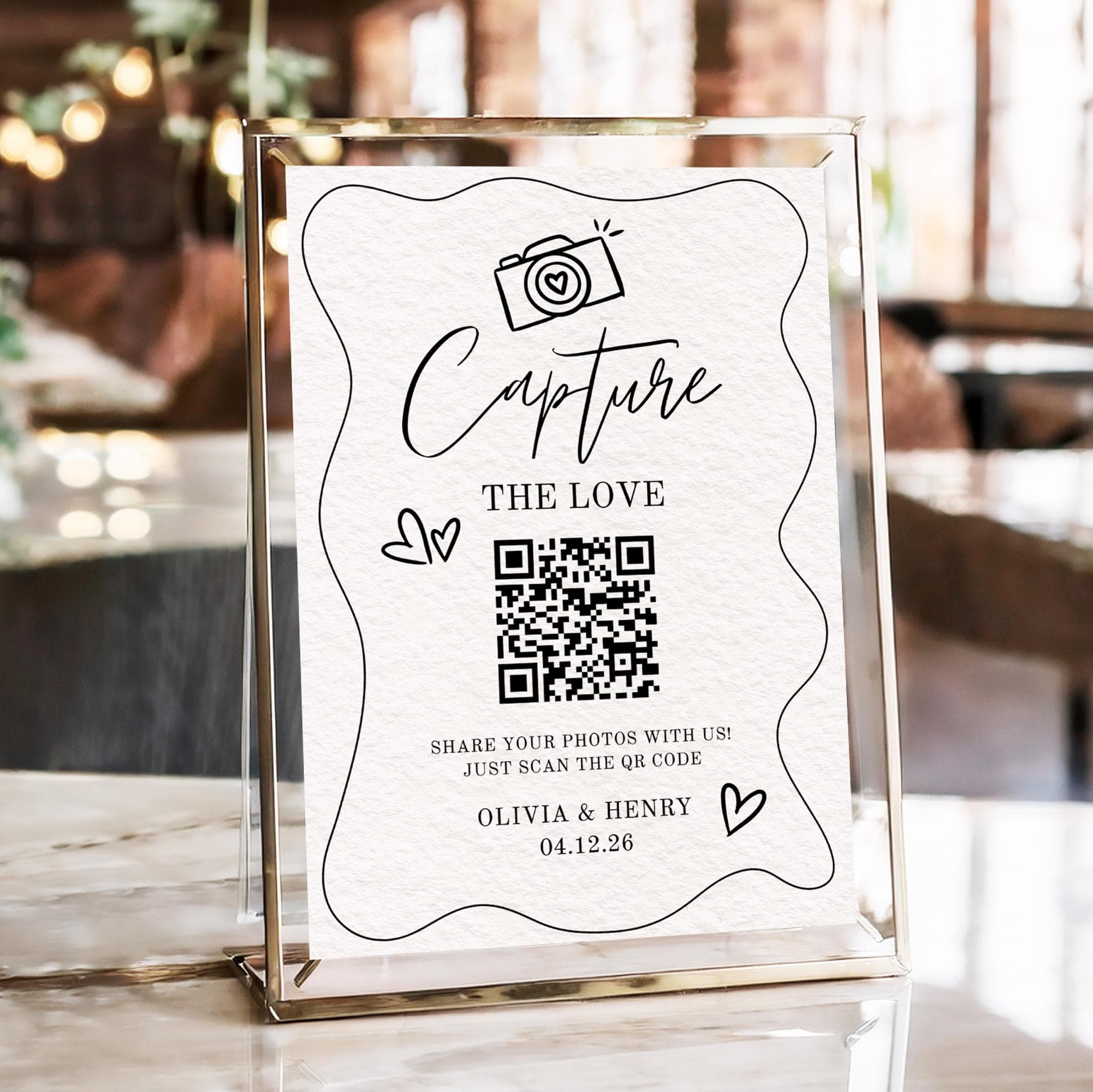
A wedding hashtag and a QR code seem to promise the same thing. Both are meant to gather up the photos your guests take, so that all those candid, off-the-cuff moments do not disappear into a hundred separate camera rolls the day after the wedding. You put one or the other on a little sign, guests do something with their phones, and the pictures come flooding in. That is the theory, anyway.
In practice the two work completely differently, and they deliver very different results. A hashtag lives on social media and depends on people choosing to post. A QR code sends guests straight to an upload page and gathers the actual files. Once you understand how each one really behaves, the choice gets a lot clearer. Here is the honest comparison, without pretending the hashtag has no place or that the QR code is magic.
The Short Answer
If your goal is to end up with as many of your guests' photos as possible, in the highest quality, in one place you actually own, the QR code wins. It collects more photos, keeps them at full resolution, and puts them in a gallery that belongs to you rather than to a social network. A hashtag is better for one specific thing: public buzz. It is the fun, visible, social layer where friends can see each other's posts in real time. Most couples want the QR code once they see the difference, and some run both, using each for what it is genuinely good at.
How a Wedding Hashtag Works
A wedding hashtag is a short, unique tag, something like #SmithSaysIDo, that you ask guests to add when they post photos to Instagram, TikTok, or another platform. The idea is that anyone can then tap the hashtag and see every public post in one feed. It costs nothing to invent, you can print it on signs and stationery, and there is genuinely something lovely about scrolling a live stream of your day through your friends' eyes. But the mechanics come with real limits that are easy to miss until after the wedding.
The strengths of a hashtag are worth stating plainly:
- Zero setup. You just pick a phrase. There is no account to create and nothing to configure beyond deciding on the words.
- Public sharing built in. Guests who love posting get to share your day with their own followers, which spreads the joy beyond the guest list.
- Social buzz in the moment. A live feed of posts feels celebratory, and seeing friends tag each other adds to the atmosphere on the day.
The weaknesses are just as real, and they are the reason so many couples feel let down by the hashtag afterwards:
- It only reaches guests on that one platform. If someone does not use Instagram, or does not post, their photos never enter the feed. A large slice of any guest list simply is not active on the app you chose.
- You get compressed social copies, not originals. Anything posted to a social platform is squeezed down in quality. Even if you screenshot every post, you are saving a shrunken version, never the crisp full-resolution file that sat on the guest's phone.
- Participation is usually low. Most guests never post at all. They take pictures, mean to share them, and then the moment passes. A hashtag quietly depends on the minority who post publicly.
- Photos scatter and get missed. Private accounts, forgotten tags, typos in the hashtag, and posts that arrive weeks later all mean the feed is never the full picture. Good shots slip through the cracks.
- You do not own the photos. The images live on other people's accounts and on a platform you do not control. If a friend deletes a post or locks their profile, that memory goes with it.
How a QR Code Works
A QR code takes a different route to the same goal. Instead of asking guests to post publicly, it sends them straight to a private upload page for your wedding. A guest points their phone camera at the printed code, taps the link that appears, and uploads photos and videos directly from their camera roll. There is no app to install and no account to make. Every phone sold in the last several years reads QR codes with the built-in camera, so it works the same on an iPhone or an Android, for a tech-savvy cousin or a grandparent who has never heard the word hashtag.
Because the upload goes to a page you control rather than to a social network, the results are fundamentally different. The advantages stack up:
- No app, no login. The whole thing runs in the phone's browser, so there is almost nothing standing between a guest and a completed upload.
- It works for every guest, on or off social media. You are not limited to people who use a particular platform. Anyone with a smartphone can contribute, which pulls in far more of the room.
- Full-resolution originals. Guests upload the actual files, so you receive crisp, print-quality photos and video rather than compressed social copies.
- One gallery you own. Everything lands in a single shared gallery that belongs to you and never expires, instead of being scattered across accounts you cannot access.
- A live slideshow. Uploaded photos can appear on a screen at the reception in real time, which is both a lovely touch and the single best way to encourage more people to add their shots.
The trade-offs are honest ones. A QR code needs a few minutes of setup before the day, because you have to create the gallery and print the code onto a sign or card. And most good services carry a small cost, though many, including ours, are free to start. If you want the full playbook on placement, sign wording, and timing, our complete QR code wedding photos guide covers it in detail.
Hashtag vs QR Code: Head to Head
Laid out side by side, the practical differences are easy to weigh. This is not about one being trendy and the other old-fashioned; it is about what each one actually delivers into your hands after the wedding.
| What matters | Wedding hashtag | QR code |
|---|---|---|
| Participation | Low: only guests who post | High: anyone with a phone |
| Photo quality | Compressed social copies | Full-resolution originals |
| Who it reaches | Users of one platform | Every guest, any phone |
| Do you own the photos | No, they live on others' accounts | Yes, in your own gallery |
| Privacy | Public by default | Private gallery you control |
| Effort to set up | None, just pick a phrase | A few minutes to create and print |
| Cost | Free | Small, often free to start |
| Works without social media | No | Yes |
When a Hashtag Still Makes Sense
None of this means the hashtag is useless. For the right couple it adds something a private gallery cannot, and it would be dishonest to pretend otherwise. If public buzz is part of what you want from your wedding, a hashtag is the natural home for it. There is real warmth in watching your friends post their own view of the day and tag each other in the comments while the party is still going.
- You genuinely want public buzz and are happy for photos of your day to be shared beyond the guest list.
- You have a very online guest list where most people post to the same platform anyway.
- You love seeing posts roll in on social in real time and would enjoy scrolling the feed on the day and afterwards.
If those describe you, the hashtag earns its spot on the sign. Just go in clear-eyed about what it will and will not collect, and do not rely on it as your only method of gathering photos.
Can You Use Both?
Yes, and for a lot of couples that is the best of both worlds, because the two tools play completely different roles. Think of the QR code as your reliable collector, the thing that quietly gathers full-quality photos from everyone in the room and files them into a gallery you keep forever. Think of the hashtag as the social layer on top, the public, celebratory feed for the friends who love to post. One is about ownership and completeness; the other is about visibility and fun. They do not compete so much as cover for each other's blind spots.
In practice, you print both on the same sign: a friendly line inviting guests to scan the code to add their photos, and the hashtag underneath for anyone posting to social. The QR code makes sure you actually end up with the pictures, while the hashtag keeps the buzz alive. If you want a full strategy for capturing everything, how to collect every photo your wedding guests take walks through it, and the best way to share wedding photos with guests covers getting your photos back out to everyone afterwards.
The Verdict
For the job most couples actually care about, which is ending up with the photos your guests took, the QR code wins on the three things that count: participation, quality, and ownership. It reaches every guest rather than just the ones who post, it keeps the originals instead of shrunken copies, and it puts everything in a gallery that is yours and does not vanish. The hashtag simply cannot match that, because it was never really designed to collect files; it was designed to make posts visible.
So make the QR code your primary method for gathering photos, and keep the hashtag as a bonus if you love social media and want the public buzz. Used that way, you get the complete set of memories in your own hands and a lively feed to enjoy on the day. That is not a close call once you have seen both work; it is the QR code doing the heavy lifting, with the hashtag adding a little sparkle on top.
Whichever you choose, decide before you print your signs, because the wording and layout depend on it. If collecting every photo matters to you, lead with the QR code, make the sign clear and friendly, and let the hashtag ride along for the guests who want it. Your future self, scrolling a full gallery a year from now instead of a handful of compressed screenshots, will be glad you did.
Frequently asked questions
Is a QR code better than a wedding hashtag?
For actually collecting your guests' photos, yes. A QR code reaches every guest regardless of which apps they use, keeps full-resolution originals, and puts everything in one gallery you own. A hashtag is better only if your main goal is public social buzz rather than gathering the pictures themselves.
Do wedding hashtags still work in 2026?
They still work as a way to group public posts on social media, and they can be fun for a very online guest list. What has not changed is the limitation: a hashtag only captures compressed copies from the minority of guests who actually post publicly, so it should not be your only method for collecting photos.
Can I use both a hashtag and a QR code?
Absolutely, and many couples do. Use the QR code as your reliable collector for full-quality photos into a private gallery you own, and use the hashtag as the social layer for guests who love to post. You can print both on the same sign so each does the job it is best at.
Why do so few guests use the wedding hashtag?
Most people simply do not post to social media in the moment. They take photos, intend to share them later, and then the day moves on. A hashtag also excludes anyone not active on the chosen platform. A QR code that opens a quick browser upload removes that friction and pulls in far more of the room.
Do I get full quality photos from a hashtag?
No. Anything posted to a social platform is compressed to save space, so even if you save every tagged post you are keeping a shrunken version, not the original file. A QR code upload collects the actual full-resolution photos and videos straight from each guest's camera roll.
Get every photo, not just the posted ones
A QR code collects full-resolution originals from every guest, straight to one gallery. Create your event in minutes.